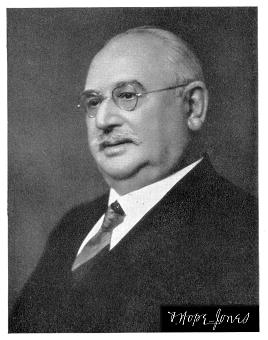
Frank Hope-Jones
Horology / Electrical Engineering
Frank Hope-Jones (1867–1950) was a British horologist and electrical engineer, best known as the founder of the Synchronome Company, which pioneered electric master clock systems. His work led to the development of the Shortt–Synchronome clock, for decades the most accurate timekeeper in the world.
Hope-Jones devised the famous 'pip' time signal, first broadcast by the BBC in 1924 and later adopted by broadcasting organisations across the globe. He was also active in the early days of radio, and was a founder member of the Radio Society of Great Britain.
Frank was born in Eastham, on the Wirral peninsula, in 1867 he was not himself born in Wales. His Welsh connection comes through his father, William Hope-Jones, who was born in Ruthin, Denbighshire, and his grandfather, Edward Jones, who was also born in Ruthin and worked there as a solicitor. His brother was Robert Hope-Jones, the celebrated designer of the electric theatre organ.