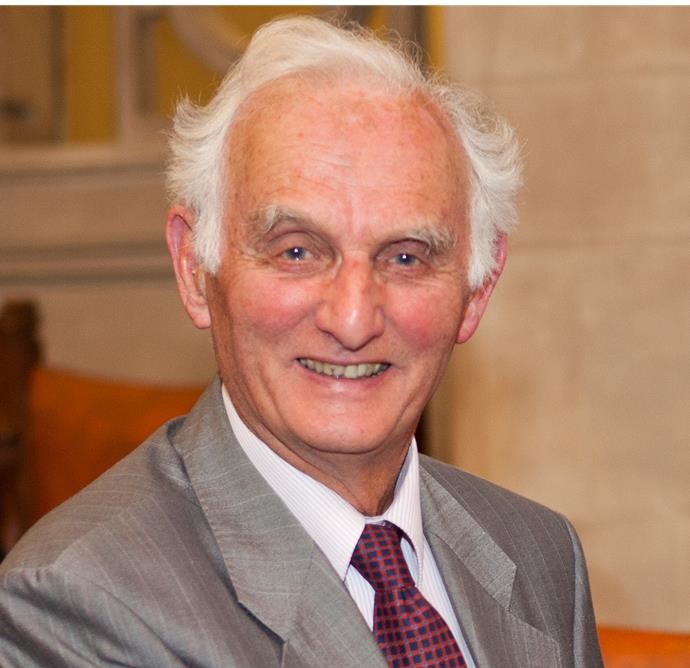
Sir John Houghton
Meteorologist
Sir John Theodore Houghton was born on 30 December 1931 in Dyserth, a village in the countryside of North Wales, and went on to become one of the world's most influential atmospheric physicists. He studied at Jesus College, Oxford, before building an international reputation in the study of atmospheric physics.
Houghton became Deputy Director of the Rutherford Appleton Laboratory before his appointment in 1983 as Director General, and later Chief Executive, of the UK Meteorological Office. In 1990 he established the Hadley Centre for Climate Prediction and Research, which became a world-leading centre for climate science.
His most significant global contribution came through the Intergovernmental Panel on Climate Change (IPCC), which he helped establish and whose scientific assessment working group he chaired through its first three reports, from 1990 to 2001. This body of work directly inspired major international climate conferences, including those in Rio, Kyoto and Buenos Aires, and in 2007 the IPCC's working group shared the Nobel Peace Prize with Al Gore for its efforts to build and disseminate scientific knowledge about climate change. Houghton was knighted for his services to science, and died on 15 April 2020 at the age of 88.